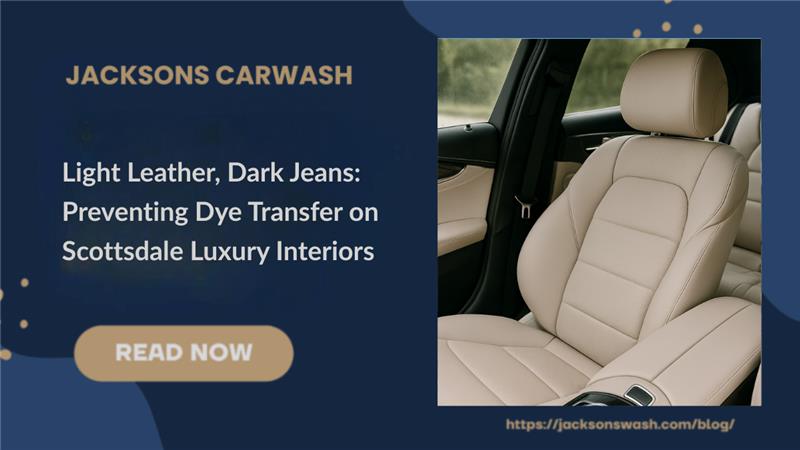
If you drive a Lexus, BMW, Audi, or any other luxury vehicle around Scottsdale with light leather seats, you probably know the feeling: you slide behind the wheel in dark jeans and wonder, “Is this going to stain?” Light beige, ivory, or white leather looks incredible in the showroom and makes any cabin feel upscale, but it also shows everything, especially dark dye from denim and other clothing. Over time, that soft gray-blue shading along bolsters and cushions can make a relatively new interior look tired and less luxurious. The good news is that denim dye transfer is a common, manageable problem—as long as you understand why it happens, what not to do at home, and how professional leather care can safely bring your seats back toward their original, clean look.
Why Denim Dye Loves Light Leather Seats
Dark jeans and other saturated fabrics are dyed with pigments that do not always stay perfectly locked into the fibers, especially when the material is new. When you sit down, your body weight, movement, and heat press those loose dye molecules against the leather surface. Light-colored automotive leather is usually coated with a protective finish, but that finish still has pores and microtexture. Over time, pigments work into those tiny valleys, leaving the faint blue or gray clouds you see on seat bottoms, bolsters, and armrests. In a place like Scottsdale, where you often get into the car warm after walking in the sun, that heat and occasional perspiration can make dye transfer even more likely. The contrast between the pale leather and dark fabric simply makes the problem more visible.
How Arizona Climate Makes Dye Transfer More Stubborn
Scottsdale adds a few extra challenges to the resale of light leather. High temperatures soften both fabrics and the leather’s protective coating, making it easier for dye to migrate. Low humidity dries out leather over time, especially if it is not regularly conditioned, which can make the surface more absorbent. Fine dust that settles on seats and armrests can act like a mild abrasive when people slide in and out, creating microscopic wear that allows pigments to settle more deeply. Afternoon pool days, sunscreen, and sweat all add moisture and body oils into the mix, further encouraging dye to bond with the leather coating. That combination means Scottsdale luxury owners often see denim shading show up sooner than drivers in milder climates, particularly on the outer seat bolsters that see the most friction.
Common DIY Mistakes That Make Things Worse
When you first notice blueish tint on a light leather seat, it is tempting to attack it with whatever is in the cleaning closet: all-purpose cleaners, alcohol, harsh scrubbing pads, or “magic” eraser-style sponges. The problem is that while these might lift some of the visible dye, they can also break down the clear protective layer on top of the leather. Major upholstery care guides on leather upholstery stain removal warn that aggressive cleaners and abrasive tools can dull the finish, strip away protective coatings, and even push pigments deeper into the surface instead of removing them. Once that top coating is compromised, the leather underneath is more vulnerable to UV damage, cracking, and future staining. What started as a cosmetic issue can turn into a permanent texture and durability problem if the wrong DIY methods are used.
How Professional Leather Care Treats Dye Transfer Safely
Professional leather care takes a more controlled, systematic approach. Instead of blasting the stain with the strongest cleaner on the shelf, trained technicians assess the type of leather, the severity of the dye transfer, and the condition of the protective coating. With specialized products and soft brushes, they work to lift pigment from the surface without over-saturating the leather or scrubbing through the finish. In some cases, multiple gentle passes are better than one aggressive attempt. At Jacksons, dedicated Leather Care services are designed to safely clean and condition automotive leather, addressing denim transfer, body oils, and everyday grime while preserving the integrity of the factory coating. When needed, they can also recommend additional treatments to help protect high-wear zones after the interior has been refreshed.
Scottsdale Luxury Interiors Need a Different Level of Attention
Scottsdale is full of high-end vehicles with light leather interiors—from European sedans and SUVs to premium trims of domestic models. These cabins are meant to feel like living rooms on wheels: bright, airy, and sophisticated. But that sophistication comes with low tolerance for visible wear. A small patch of dye transfer on a tan seat or a dingy-looking bolster can make an otherwise pristine car feel older than it is. Working with a team that regularly cares for luxury interiors in this climate can make a real difference. At a dedicated Scottsdale auto detailing location, staff are used to seeing denim stains on seats, shiny or slick-looking leather from built-up body oils, and UV-related dryness on headrests and armrests. That experience helps them choose the right techniques and products for each interior, treating your light leather like the premium material it is.
Preventing Dye Transfer Before It Becomes a Problem
While professional cleaning is invaluable once stains appear, there are several preventative steps you can take to slow down dye transfer in the first place. Washing new dark jeans a few times before wearing them in a light-leather car can reduce excess dye. On especially hot days or long drives, consider using a breathable, color-safe seat cover or placing a light-colored towel down if you are wearing brand-new denim or clothing that you know tends to bleed. Being mindful about sliding across the seat versus lifting yourself in and out can minimize friction on bolsters. Regular conditioning with compatible products helps keep the leather’s protective coating supple rather than dry and porous, making it more resistant to dye and easier to clean when transfer does happen. These habits will not eliminate the risk completely, but they can significantly slow its progression.
Why Quick Action Matters with Light Leather
With denim stains and other color transfer, time matters. Fresh dye sitting on the surface is generally easier to remove than pigment that has had months to settle and interact with the leather’s coating. Getting in the habit of visually checking your seats—especially the driver’s side—every week or two can help you catch early shading before it becomes strongly embedded. If you notice new staining, avoid the urge to experiment with harsh chemicals and instead plan a professional leather care appointment. The sooner that transfer is addressed with the right tools, the more likely it is that your seats can be restored close to their original appearance without needing more intensive repair work.
Protecting Resale Value and First Impressions
For many Scottsdale owners, a luxury vehicle is both a personal pride item and a financial asset. When it is time to sell or trade in, the condition of the interior speaks volumes to buyers and appraisers. Clean, even-toned light leather seats suggest careful ownership and reinforce the vehicle’s premium positioning. In contrast, heavy denim staining, shiny worn bolsters, or patchy cleaning attempts can make the car feel tired, even if the mechanical condition is excellent. Regular, professional leather care is a way of protecting that asset. By keeping dye transfer under control and preserving the feel of the original finish, you make the cabin a strong selling point rather than a negotiation weakness. First impressions start long before the test drive—often the moment someone opens the door and looks at the seats.
Making Leather Care Part of Your Scottsdale Routine
The most effective approach to protecting light leather in Scottsdale is to treat leather care as part of your normal maintenance routine, not a one-time emergency response. That might mean scheduling professional leather cleaning and conditioning a couple of times a year, especially if you frequently wear dark jeans or spend long hours in the car. Between those appointments, you can support the process with simple habits like washing new denim, avoiding aggressive DIY cleaners, and staying alert for early signs of transfer. When you are ready to build leather care into how you look after your vehicle, you can explore nearby Jacksons locations to find the ones that best match your commute and errands. With the right combination of professional leather care and thoughtful daily decisions, your light leather interior can keep looking like a Scottsdale luxury interior should—bright, clean, and inviting every time you open the door.
Because it experiences the most friction, body heat, and repeated contact from clothing during daily driving.
Yes—heat, pressure, and movement can release dye from fabric even without visible moisture.
Bolsters experience more sliding contact, which wears the protective coating and allows pigment to settle more easily.
Proper conditioning helps keep the leather’s protective layer flexible, making it less absorbent and easier to clean.
In some cases, prolonged transfer can bond deeply into the coating, making full removal difficult without repair.
Most luxury interiors benefit from professional leather care every 4–6 months due to heat, sun, and clothing friction.