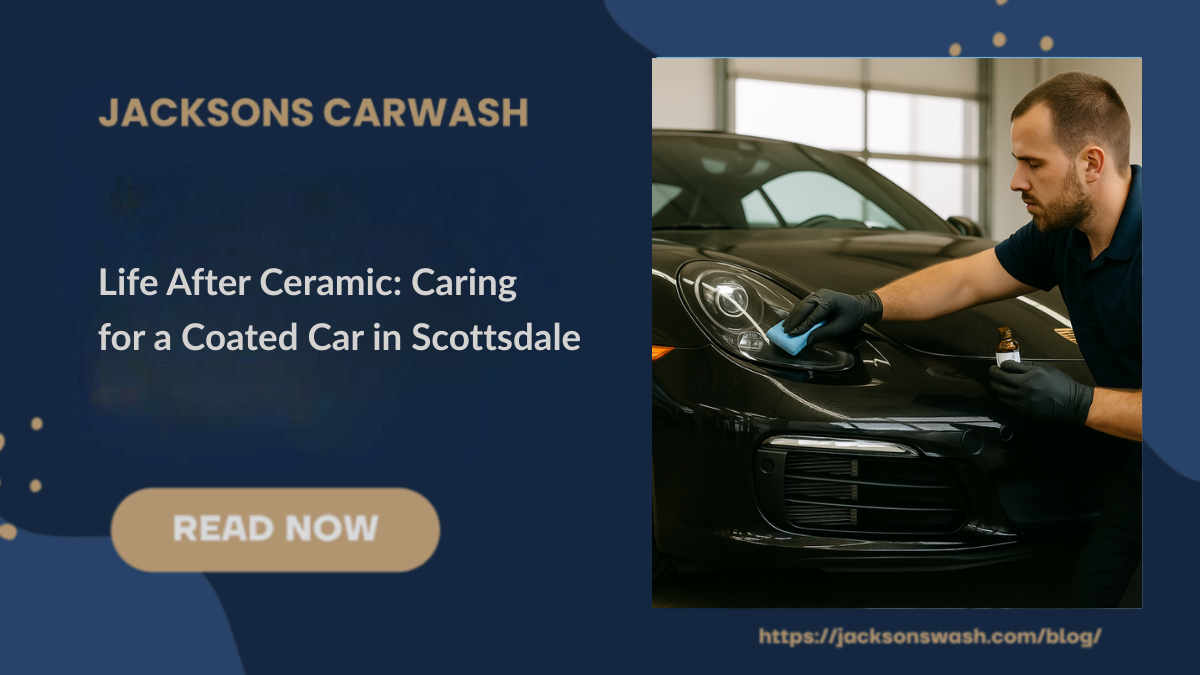
For many Scottsdale drivers, getting ceramic coating feels like the ultimate “I really care about this car” moment. You invest in professional protection so your paint can stand up to Arizona’s sun, dust, and hard water, and you expect the car to look better and stay cleaner for longer. But once the coating is on and the keys are back in your hand, a new question appears: what now? Ceramic is not a magic force field that means you never have to wash again. It is a high-performance layer that works best when you understand how to live with it day to day. The way you wash, dry, and maintain your vehicle after coating has a big influence on how long that slick, glossy look lasts and how much value you truly get from your investment.
What Ceramic Coating Really Does for Scottsdale Drivers
Ceramic coatings are designed to bond to your clearcoat and create a durable, protective layer on top of your paint. They are typically silica-based products that add chemical resistance, UV protection, and a noticeably slick surface that makes it harder for dirt, dust, and water to stick. As resources like J.D. Power’s overview of ceramic coating for cars explain, these coatings can last for years when properly applied and maintained, offering far more longevity than traditional wax. In a place like Scottsdale, that extra shield is especially valuable. Intense sunshine, fine desert dust, and frequent hard-water exposure all work on your clearcoat every time you drive or park. With a quality ceramic layer in place, your paint is better equipped to handle those conditions while staying glossier and easier to clean.
Why a Coated Car Still Needs Regular Washing
One of the most persistent myths about ceramic coating is that it eliminates the need for washing. The truth is that it changes how dirt behaves on the surface, not whether dirt lands there in the first place. Dust, pollen, and road film will still accumulate on your vehicle as you move through Scottsdale traffic or park near construction and landscaping. The difference is that on a coated car, that contamination tends to sit on top of the coating instead of clinging directly to the pores of your clearcoat. That makes it easier to rinse away, but you still need water, soap, and proper technique to remove it. Leaving layers of dust and grime on the coating for long periods defeats one of its biggest advantages: helping your car stay cleaner with less effort. Regular washes are what let the coating show off its self-cleaning and hydrophobic behavior.
How Arizona’s Climate Affects Ceramic Maintenance
Scottsdale and the broader Phoenix area introduce a few special factors that ceramic-coated owners elsewhere may not face as intensely. UV exposure is extreme for much of the year, and high temperatures push both paint and coatings hard. Fine desert dust behaves like ultra-fine sandpaper when rubbed across surfaces, which means you want to let water and soap do the heavy lifting instead of dry-wiping. Hard water from irrigation overspray and hose rinses leaves mineral deposits that can dry on the coating and dull its appearance if they are not washed away promptly. Occasional storms can produce dirty rain that leaves a film across your panels and glass. Ceramic gives you a significant advantage in all of these situations, but only if you rinse and wash often enough to prevent contaminants from baking in under the Arizona sun.
Pairing Ceramic Coating with the Right Wash Routine
After coating, your wash routine does not have to become complicated; it simply needs to be consistent and gentle. Sudden, aggressive scrubbing is the enemy of any protective layer, including ceramic. A smarter strategy is to wash more frequently using a process that respects the coating. Pre-soak, pH-appropriate soaps, and soft materials help lift away dust and grime without grinding it into the surface. For many Scottsdale drivers, it is more realistic to rely on a professional wash process than to try and recreate a perfect wash setup at home. A dedicated Full Service Wash at Jacksons combines a controlled wash sequence with interior basics, saving time while respecting your coated finish. The coating actually makes those visits more effective, because dirt releases more readily and the car regains that “freshly detailed” look quickly.
Why Local Expertise Matters After You Get Coated
Scottsdale drivers also benefit from working with teams that understand how ceramic behaves in Arizona’s real-world conditions. At a Scottsdale auto detailing location, staff see coated vehicles that commute across the Valley, park in sun-exposed lots, and make weekend trips up and down the 101 or 51. They recognize the patterns of water spotting on panels that sit under landscaping sprinklers, know how dust tends to accumulate on horizontal surfaces, and understand how to refresh and maintain coatings without using products that interfere with their performance. That local experience is important when you want guidance on wash frequency, recommended services, and realistic expectations for how your coated car should look after a busy week of driving in city traffic and on desert roads.
Checking In on Your Coating and When to Re-Up
Just like tires, brakes, and other wear items, ceramic coatings are not permanent. Over time, exposure, washing, and normal use gradually reduce their performance. A simple way to check your coating is to watch how water behaves after a rinse. Healthy ceramic usually produces tight, consistent beading or strong sheeting that quickly clears the panel. If water begins to sit in flat sheets, cling in an uneven way, or leave more residue than it used to, it may be a sign that the coating is weakening or heavily contaminated. At that point, a professional evaluation can help determine whether a deep decontamination wash, light polishing, or re-application is appropriate. When you are ready to restore or apply fresh protection, Jacksons offers dedicated ceramic coating services designed to pair high-quality products with proper prep and application so your next coating cycle starts with a strong foundation.
Everyday Habits That Protect Your Ceramic Coating
Beyond wash choices and professional services, small daily decisions make a big difference in how long your coating performs at a high level. Avoid using household cleaners or random detailing products that are not designed for coated cars; some can leave residues that interfere with hydrophobic behavior or dull the surface. Try not to drag dry dust off the paint with a towel or your hand, since that can introduce micro-scratches over time. If you know your car was hit by heavy bird droppings or tree sap, plan to rinse and wash those areas as soon as practical instead of letting them sit for weeks. When parking around Scottsdale, give preference to spots that minimize sprinkler exposure or intense overhead debris if you have a choice. None of these steps require perfection, but together they help your ceramic work the way it was meant to.
Making Ceramic Ownership Easier with Jacksons
The real goal of ceramic coating is not to give you a new list of chores; it is to make your life easier while keeping your vehicle looking better in a harsh climate. When you combine a quality coating with a simple, realistic maintenance plan that fits your actual schedule, you get the best of both worlds: a car that is quicker to wash and slower to show the wear of Arizona driving. Instead of spending weekends trying to perfect your own wash process in the driveway, you can rely on professionals for deeper care and use efficient washes to maintain your finish between bigger services. When you are ready to build that routine, you can explore nearby Jacksons locations and choose the ones that align with your commute and errands. With a smart maintenance approach and local expertise on your side, life after ceramic in Scottsdale can be exactly what you hoped for—glossy, low-stress, and built to handle the desert.
It makes washing easier, not unnecessary—dust and minerals still need regular removal to protect the coating.
Ceramic doesn’t block dust from landing; it prevents contaminants from bonding deeply to the paint.
Yes—mineral deposits can build up on top of the coating and reduce its slickness if not washed off regularly.
Consistent water beading or fast sheeting after a rinse is a common sign the coating is still healthy.
Air-drying can leave mineral residue in hot, hard-water conditions, even on coated surfaces.
Most benefit from periodic professional care once or twice a year to remove buildup and refresh performance.